

Where Education Meets Innovation in SPD: Q&A With Renee Hege, CST, AGE
For more than 25 years, Renee Hege, CST, AGE, has dedicated her career to advancing surgical education and improving patient care. By personally founding the Surgical Technology and Central Sterile Processing programs at Davidson-Davie Community College in North Carolina, she has helped shape the next generation of surgical technologists and sterile processing professionals while continually looking for new ways to improve how they learn.
Beyond the classroom, Hege is the National Director of Clinical and Educational Services for SureCount Surgical (SCS). She is a national conference speaker for the Association of Surgical Technologists (AST), a published author, an Accreditation Review Council (ARC/STSA) site visitor, and an annual surgical mission leader in the Dominican Republic.
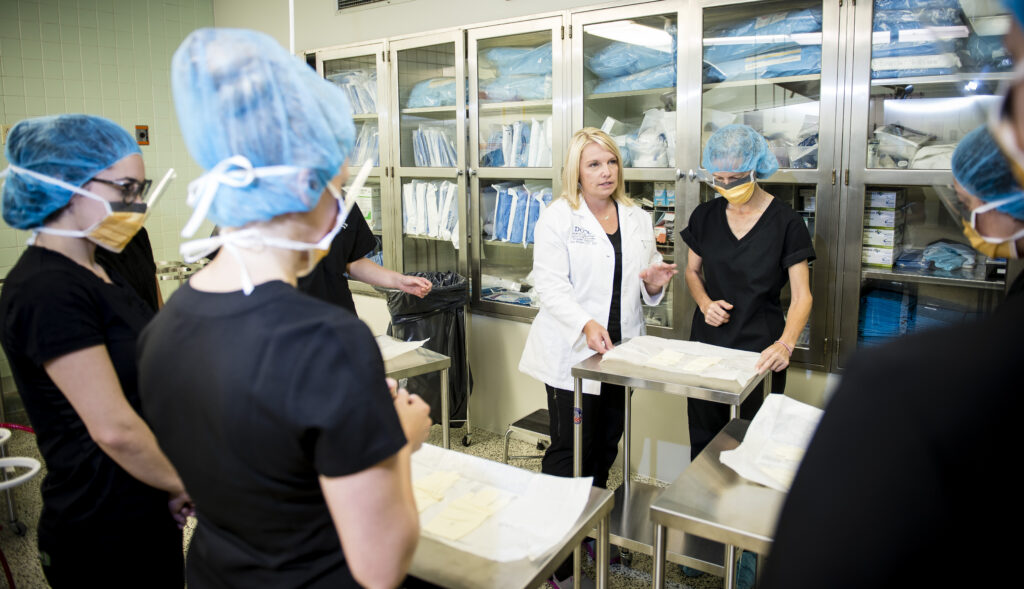 We spoke with Hege about why education is central to patient safety, the challenges facing today’s SPD professionals, and how interactive learning tools can help prepare the next generation of technicians.
Why is education so important to patient safety?
In surgery, our patients are asleep, and we are their advocates. They can’t speak for themselves, so it’s our responsibility to prepare students to take that role seriously.
When students enter the operating room (OR) or sterile processing department (SPD), I want them to understand that every instrument they prepare and every decision they make affects someone’s mother, father, son, or daughter. I love surgery because it’s a unique type of patient care, and I want every student to leave our program with the knowledge, confidence, and integrity to do the job the right way.
What are the biggest learning curves for students today?
Technology has changed education in many positive ways, but so much learning happens online now that students often miss valuable hands-on experience
They need opportunities to handle instruments physically, work through real scenarios, and build confidence with their hands. Not just through a computer screen. They also benefit from collaborating with classmates, learning from different perspectives, and developing the communication skills they’ll need in healthcare environments.
What was it like building two education programs from the ground up?
It was definitely a challenge, but I love a good challenge.
Developing both the surgical technology and sterile processing programs from scratch remains one of the greatest accomplishments of my career. It required a tremendous amount of work, but seeing how those programs have grown and watching students succeed has made every challenge worthwhile.
What challenges are today’s surgical technologists facing?
Surgery evolves every day. Robotics, new technology, and constantly changing procedures mean that learning never stops.
I always tell my students, “Tell me what you’ve learned this week,” because chances are they’ll teach me something new. No two days in the OR are ever the same.
The workforce has also experienced significant changes since COVID-19. Staffing shortages created new challenges, although many facilities are beginning to rebuild stable, full-time teams after relying heavily on traveling professionals. Regardless of experience level, continuing education is critical. It’s important that surgical techs don’t just become comfortable in one area. Keep learning and expanding your skills.
What about SPD students? What challenges do they face and how, as their teacher, do you address them?
After COVID, we realized education needed to become more flexible.
Our original sterile processing curriculum consisted of two semesters. Students completed classroom instruction during the first semester and clinical experiences during the second. To better serve working professionals, we redesigned the program into a 12-week continuing education course.
Students now complete the academic coursework online while attending several evening lab sessions to practice hands-on skills. This allows them to continue working full-time while earning their education and preparing for certification.
I also encourage every technician to pursue additional certifications throughout their career. Organizations like the Healthcare Sterile Processing Association (HSPA) provide tremendous educational opportunities, and continuing to learn helps professionals grow long after they enter the workforce.
You’re currently consulting for a new educational tool with SureCount Surgical, the Instrument IQ Tray. What is it and how will it help educators and students?
As an educator, I kept asking myself: How can I make learning instruments easier while allowing instructors to spend more time teaching higher-level concepts?
Students constantly ask instructors to identify instruments or explain their uses. We wanted to create a resource that allowed them to learn independently while still reinforcing classroom instruction.
The Instrument IQ Tray organizes real surgical instruments in a standardized layout. Every instrument includes a QR code that links to an interactive learning module featuring instrument names and common aliases, surgical technology learning points, sterile processing considerations, multiple instrument images and views, short instructional videos, and interactive flashcards.
The tray also incorporates material based on the AST Seventh Edition Core Curriculum, with additional QR codes connecting students to specialty-specific instruments and supplies. We’re currently expanding those resources across multiple surgical specialties.
Beyond education, how can this technology help SPDs?
We are also trialing a device called the SCS Smart Tray. The goal for this device is tray optimization and organization in OR and SPD settings.
Many instrument trays today contain items that are rarely used, yet they continue to be cleaned, sterilized, inspected, and assembled over and over again. Optimizing those trays reduces unnecessary work while improving efficiency.
The organizational design of the Instrument IQ Tray also makes it easier for SPD professionals to recognize instruments and assemble trays accurately. Better organization leads to greater consistency, fewer errors, and improved confidence for technicians.
Another main focus of yours is medical mission work. How does your mission work influence your approach to education, and vice versa?
I’ve served as a team leader for the Pons’ Dominican Republic Medical Mission and have participated in annual surgical missions since 2009.
During each mission, we work alongside Dominican surgeons, residents, and healthcare professionals to provide surgical care while also sharing education and training.
One of my long-term goals is to use the Instrument IQ Tray as a global educational resource, helping train surgical teams throughout the Dominican Republic and other underserved regions. Education has the power to improve patient care anywhere in the world. That’s something I’m really passionate about.
What words of advice do you have for SPD and surgical technology students across the world?
If you give your best, things will come to you. Always try. I believe in a very hard work ethic. Throw your ideas out there. Go out there, meet people, learn as much as you can. People in this profession are so supportive. So many of us are willing to help you, take you under our wing, and see you grow. All you have to do is ask.
SterileBits: Education Transforming the Future of SPD
To read more stories similar to this one, visit the blog on sterilebits.com.
To learn about instrument protector cards by SterileBits, visit our products page here.