

How To Lead a Growing SPD With Dannie Smith, CRCST, CHL, CIS, CER

Philadelphia, Pennsylvania–When it comes to Sterile Processing Departments (SPDs), we often talk about recruitment and how difficult it is to find and retain talent.
The safety of patients and the work-life balance of technicians absolutely depend on this growth. But what happens when the struggle to hire is over, and the team grows? Really grows?
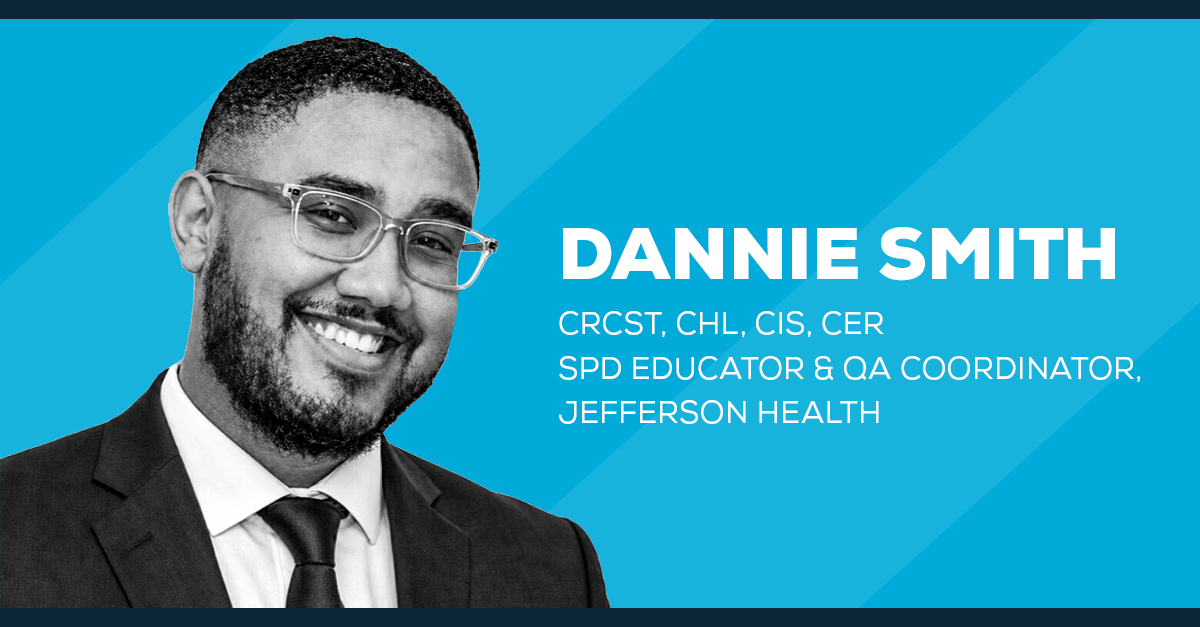
Dannie Smith, CRCST, CHL, CIS, CER is living that reality. As a sterile processing educator and quality assurance coordinator at Jefferson Health, Smith manages education and quality assurance for three different facilities. Two months ago, his SPD consisted of 90 people. Now? It’s risen to 117, with the goal of having 120 on staff.
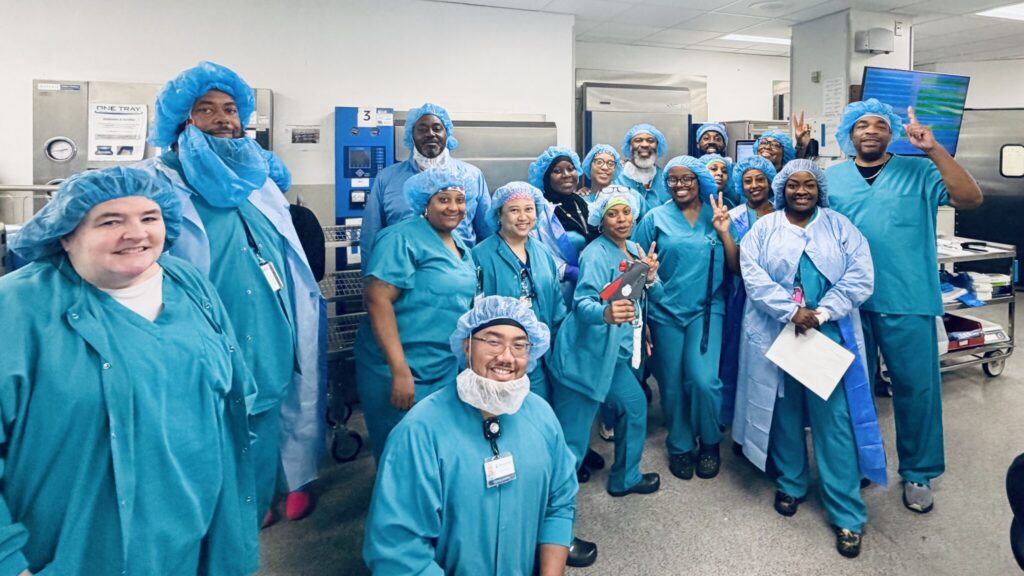
In one particularly demanding stretch, 13 traveling technicians arrived in one single week.
Though the department is thrilled to be growing, the question becomes: How do you find unity and efficiency in an SPD that is mostly composed of new employees?
How To Be There For a Growing Team
Smith takes this question incredibly seriously. Under his leadership, no team member is thrown in the deep end and expected to float on their own.
First and foremost, each new technician has an onboarding period where they work directly with Smith. He gets them up to speed at a high level before specialized training begins.
Then, each new hire spends dedicated time in each phase of the department. Because any given shift may have more new hires than veterans, it’s important to keep track of who is on each shift to make sure an equal spread of veterans and newcomers is at each station.
“Right now, we have more new people than veterans. So, we document every area that new hires are in and the supervisors keep track of how many weeks they’re on each job, whether it’s decontam, indexing, hand wash, etc.,” said Smith. “Then, the supervisors rotate them to the different areas without overlapping.”
Digitization and System-Wide Communication
Digitization has been another major component to keeping things running smoothly. After realizing paper records were too disorganized, Smith worked to digitize documentation, create QR-code resources, develop newsletters, record educational sessions, and establish ways for staff to submit questions and suggestions.
His newsletter, originally created for the three campuses he oversees, has been a major source of system-wide knowledge sharing. The goal isn’t simply to distribute information. It is to create a steady flow of communication throughout a growing department.
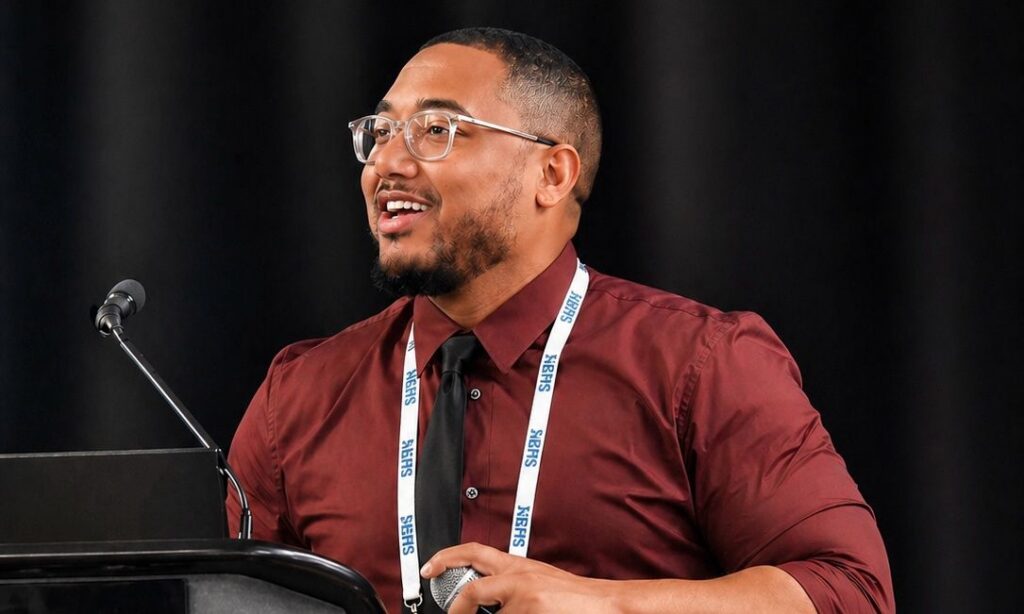
“It has been so helpful, because if anyone comes to me with a question, which happens a lot,” said Smith, “I can answer them right away in person, and also put the answer in the newsletter. That way, that knowledge can be broadcast to everyone and we are all on the same page.”
The newsletter combines education with recognition. Smith includes staff accomplishments, anniversaries, promotions and other positive news alongside information about process changes and educational topics.
“It’s important to sandwich feedback or corrections with good news,” said Smith. “I’ll call out people who did a great job this week, or shout out people who’ve been here for 20-plus years when their work anniversary comes along.”
Making SPD Make Sense
That balance reflects Smith’s broader approach to education. In a department where employees arrive with vastly different levels of experience, he has to find ways to bring everyone into the fold while accounting for differences in equipment, workflows and terminology across campuses.
“We do hire a wide variety of experience,” said Smith. “Travelers usually come with a lot of experience, but we also have technicians who are brand new to the field trying to get their foot in the door.”
Smith’s educational approach is practical and personal. Rather than relying solely on technical terminology or lengthy presentations, he looks for everyday comparisons that make sterile processing concepts easier to understand.
“Instead of just kind of using the terminology of something that would be, for example, in an IFU, I try and relate SPD concepts to everyday things,” said Dannie.
For example, he compares cleaning instrumentation to taking a shower, using soap, brushing, rinsing and drying, to help technicians connect a familiar routine to the steps required for proper instrument cleaning.
He also believes education should be engaging. Short video segments, questions and friendly competition help keep technicians involved rather than simply sitting through another presentation.
“I learned competition is a great motivator,” said Smith. “People don’t have to actually win prizes. People just want to win a game! That is the biggest motivation.”
But perhaps the most important lesson Smith has learned is that education works best when people understand why something matters.
“You can tell someone to do something, but if they don’t know why they’re doing it, they’ll go back to the way they’ve done it before,” said Smith. “But if you explain the reason behind it, which is usually patient safety, they’ll do it the right way.”
Why Education Matters
Smith’s passion for education began when he was a supervisor at a trauma center. He realized how difficult it could be to communicate sterile processing concepts to people who were new to the field. Wanting to grow this skill, Smith become an instructor for a CRCST preparation course. This is where he discovered how much he enjoyed helping people enter and grow within the profession.
“Those people who are really trying to get into the field and make a name for themselves, whether they’re changing careers or just starting college or getting out of high school and they want to get their foot in the door for a career in healthcare, that energy rubs off on me,” said Smith.
Today, that same enthusiasm drives his work with a rapidly expanding team.
“Helping them helps me,” said Smith. “If there’s somebody interested, I have to show them how to do the right thing. I owe it to my team to give them the tools to succeed.”
As his department continues to grow, Smith’s role is about more than keeping up. He is helping create a culture where questions are welcomed, knowledge is shared, and technicians understand not only what they are supposed to do, but why it matters.
For a department navigating rapid growth, that may be one of the most important things an educator can provide: a clear standard, a willingness to listen and a reason to care.
SterileBits: Grow With Confidence
To learn about instrument protector cards and robobags by SterileBits, visit our Products page here.
To read more articles similar to this one, visit our Blog and follow us on LinkedIn and Facebook @SterileBits.