

How Do Sterile Processing Standards Get Made? A Q&A With Dr. Atila Nozari, PhD, PMP

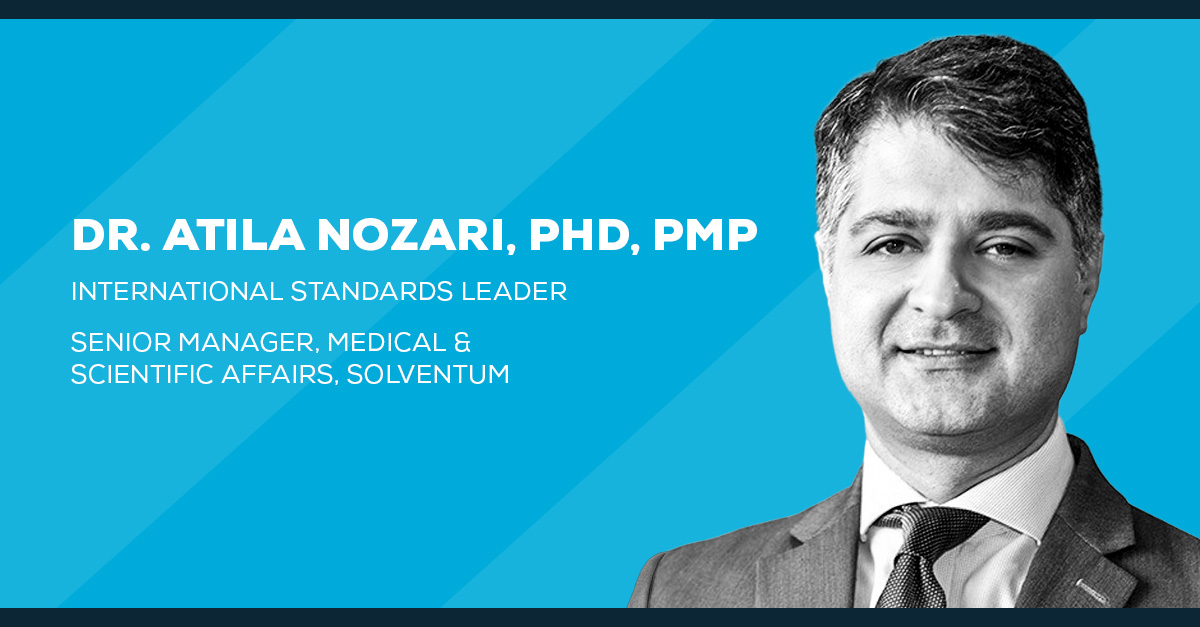
Standards are the established requirements and best practices that help keep patients and healthcare personnel safe. For sterile processing professionals, standards are more than just documents. They establish essential requirements and guidance. While not all standards are law, compliance with applicable requirements is critical.
But who decides what the standards are, and how?
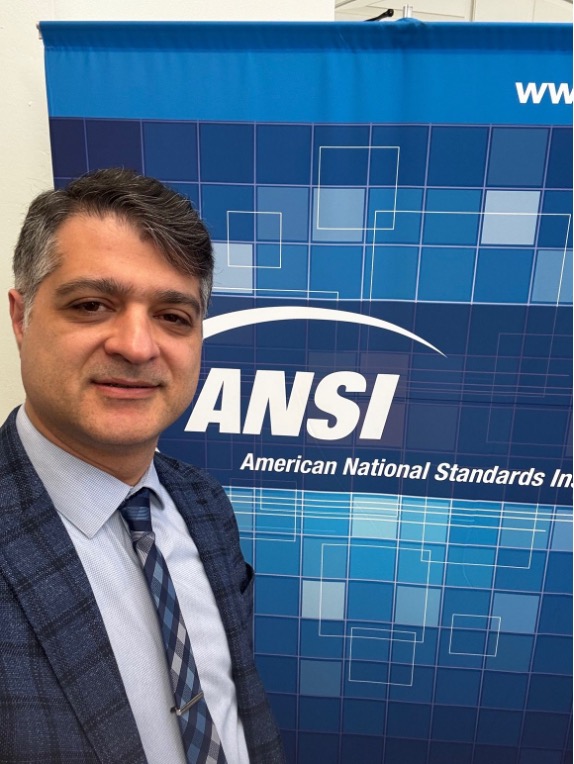
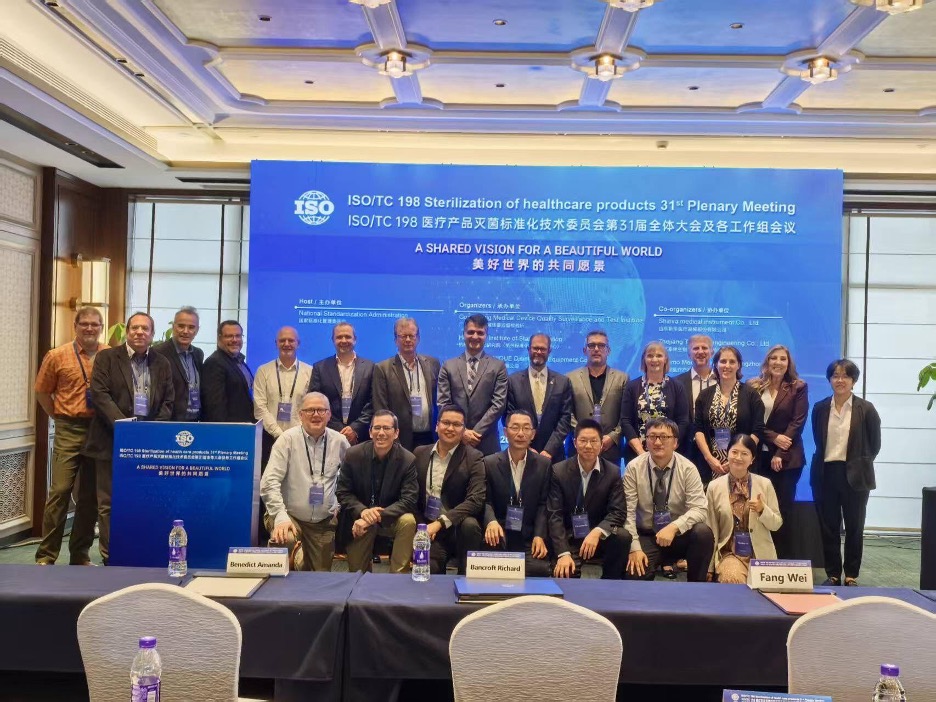
Dr. Atila Nozari, PhD, PMP, has participated in standards development in the United States, Canada, and internationally. He is a Subject Matter Expert (SME) for the Association for the Advancement of Medical Instrumentation (AAMI), the International Standards Organization (ISO), the Canadian Standards Association (CSA), the Standards Council of Canada (SCC), to name a few, and has served on standards committees for each of these organizations. He is also a Senior Manager of Medical & Scientific Affairs at Solventum (formerly 3M healthcare).
“It’s important to pay attention to how standards and guidelines are developed,” said Dr. Nozari. “Many people don’t know that they can get involved.”
To provide crucial insight into the standards that sterile processing technicians abide by every day, we spoke to Dr. Nozari about how standards are created, who gets involved, and why the process should matter to sterile processing professionals. Here’s what he had to say.
Q. First, what’s the difference between a standard and a guideline?
Dr. Nozari: Standards and guidelines are often used interchangeably, but they are different because of how they are developed.
Clinical practice guidelines are developed by professional societies and draw on the expertise of their existing members. For example, AORN is a professional society for nurses, and they establish clinical practice guidelines. Standards, on the other hand, are developed through an established standards-development process by a dedicated standards development organization, or SDO.
Organizations such as AAMI, ISO and CSA have their own procedures and terminology, but the basic principles of standards development are similar.
Q. How does the process actually begin?
Dr. Nozari: It starts with a need.
Someone, an SPD technician, a nurse, or a manufacturer, to name a few examples, identifies an issue that would benefit from a standard and proposes a new work item. The standards development team reviews the proposal to determine whether there is a legitimate and sufficiently broad need for a standard.
If it’s approved, the standards-development process can begin. If the proposed topic is too limited or doesn’t meet the organization’s criteria, it may not move forward.
Q. Who actually writes the standard?
Dr. Nozari: This is one of the biggest misconceptions. The standards organization, for example, AAMI or CSA, doesn’t simply sit down and write the standard itself.
The organization acts as a neutral convener. It brings together a group of stakeholders, including clinicians, healthcare professionals, manufacturers, engineers, regulators, academics, end users and other experts, to research and write the standard. In some cases, the working group can be as large as 250 people or more.
Those participants bring their unique knowledge and experience to the process. A manufacturer may understand a product’s technical capabilities, while a technician who uses that product every day may have practical insights that aren’t obvious from the manufacturer’s perspective. A regulator may identify requirements that need to be considered from a completely different angle.
The standard is developed by bringing all of those perspectives together.
Q. Does “consensus” mean everyone has to agree?
Dr. Nozari: No. Consensus does not mean unanimous agreement.
People can disagree with individual provisions. Those issues are discussed, debated, and, when appropriate, revised. Standards move through voting and consensus procedures established by the organization.
The goal is to reach the required level of consensus, which varies by organization, not necessarily to have 100% agreement from every participant.
Q. What happens after the first draft?
Dr. Nozari: There can be several rounds of working drafts and committee drafts. The group reviews the technical content, discusses concerns, and makes revisions.
Eventually, depending on the type of document and the organization, the draft may go through formal balloting and public review.
During public review, people who aren’t part of the working group may have an opportunity to submit comments. The committee considers those comments and determines how they should be addressed before the document is finalized.
Q. How long does the process take?
Dr. Nozari: It depends on the organization, the type of document, and the scope of the work.
Some standards organizations have very specific timelines, while others allow more flexibility. Standards generally take longer because the priority is making sure the document is technically sound and follows the required development process, not simply getting it published quickly.
An organization such as ISO, for example, has a strict 18-36 months timeline. If the standard isn’t complete before that time period, they must start over. At AAMI, they are more flexible. Because their working groups are so large, it takes more time to develop a standard that is absolutely correct.
Q. Does a standard stay the same forever once it’s published?
Dr. Nozari: No. Standards are living documents.
Science and technology change. New research is published. Regulations and legal requirements can change. All of those factors can create a need to review and revise a standard.
A committee may decide that a document needs a full revision, an amendment, or if it’s reaffirmed (simply continued use without changes).
Q. How can sterile processing professionals get involved?
Dr. Nozari: SPD professionals can participate directly in the process. Working groups have members from different stakeholder groups, so sterile processing professionals can seek out groups relevant to their expertise or areas of concern. They can also participate in public review when drafts are made available.
Being involved earlier in the process is especially valuable. Instead of waiting until a document is nearly finished to provide feedback, end users can contribute their experience throughout the development process.
For sterile processing professionals, that’s an important opportunity: the people who use standards every day can, and do, help shape what those standards become.
About Dr. Atila Nozari, PhD, PMP
Dr. Nozari is an SME and Co-Chair for AAMI, a Technical Expert and Convenor for ISO, a Technical Expert for CSA, and the SME Vice Chair for TC198 for the Standards Council of Canada (SCC).
With over two decades of extensive experience in medical device reprocessing, scientific affairs, and standards development, Dr. Nozari has a robust foundation in sterilization methodologies and a thorough grasp of industry standards, notably through active involvement in CSA, ISO, and AAMI.
His career spans academia and industry, encompassing R&D, manufacturing, and cross-functional team management, with a focus on leading high-performing teams and driving project success. He has authored numerous peer-reviewed papers on chemistry and technology, tackling challenges in photovoltaics, environmental remediation, and device reprocessing. Most recently, he co-authored Chapter 90: “Clinical Practice Guideline Development” in the newly published Translational Plastic Surgery (1st Edition), published by Academic Press, an imprint of Elsevier.
SterileBits: Shape What SPD Becomes
To learn about how robotic instrument protector cards, hinged instrument protector cards, and Robobags by SterileBits can help support your SPD, click here.
To read more articles similar to this one, visit the blog on sterilebits.com and follow SterileBits on LinkedIn and Facebook.