

Connecting the Dots: Q&A With Clinical Educator Stephen Owusu, MS, CRCST, CIS, CER, CHL
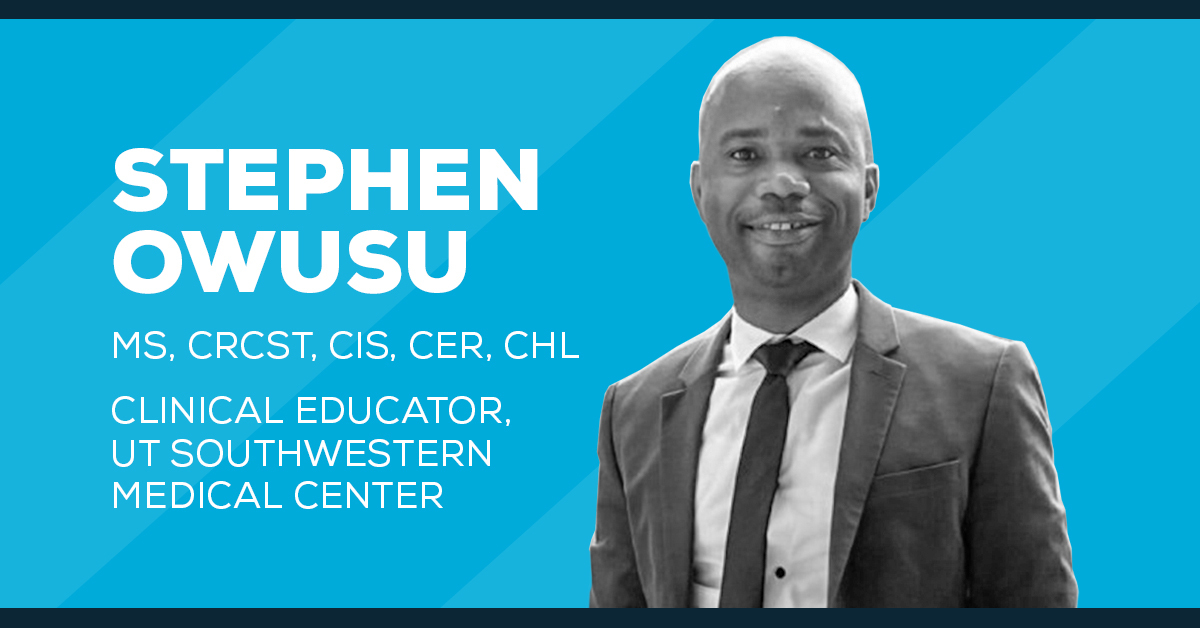
SterileBits sat down with sterile processing clinical educator Stephen Owusu, MS, CRCST, CIS, CER, CHL, to discuss what makes a great educator, and why the role is so important to hospital operations.
Dallas, Texas–In more and more hospitals and central sterile departments worldwide, a new role is gaining prominence: sterile processing clinical educator.
The rise of the role can be attributed to a number of factors. From an increased drive to maintain strict industry standards to the need to keep staff abreast of constantly evolving technology and equipment, it’s about time this role received the formalization and credit it deserves.
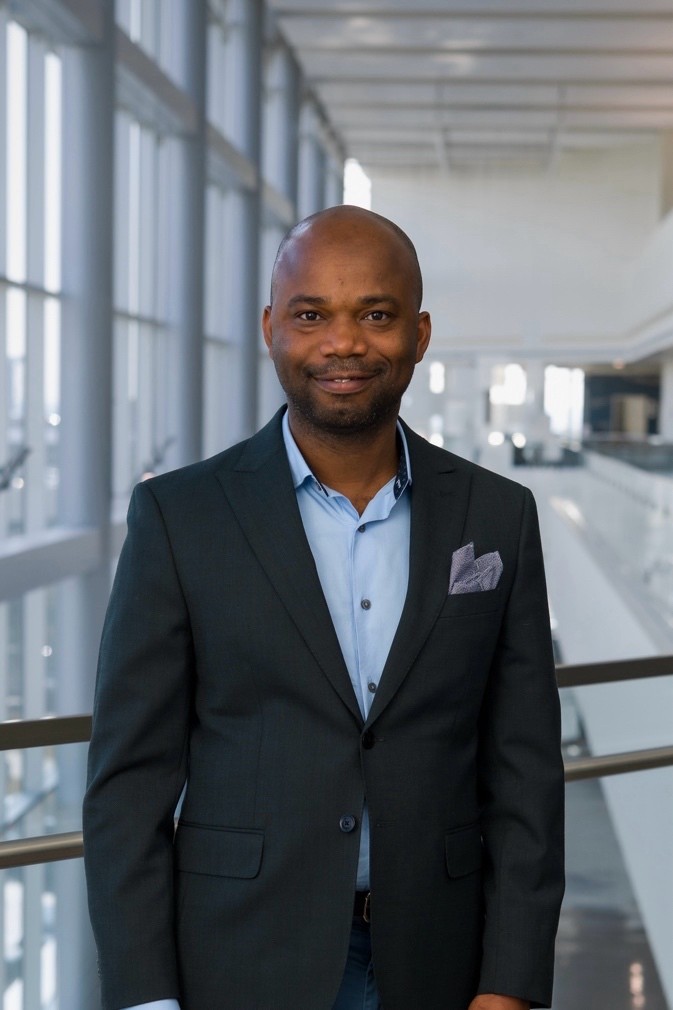
To better understand what goes into being an educator, and just how big a difference educators can make in the effectiveness of a sterile processing department (SPD) and in patient outcomes, we sat down with Stephen Owusu, MS, CRCST, CIS, CER, CHL, to get an expert’s perspective.
Owusu is a sterile processing clinical educator at UT Southwestern Medical Center and an adjunct instructor at North Central Texas College. He boasts ten years of experience, four SPD certifications, and a master’s degree. With a passion for education and a drive to see SPDs thrive, Owusu’s work forges critical pathways of knowledge and communication–pathways that can mean the difference between ease and an emergency.
Whether you’re a fellow educator or in a different specialty altogether, here is what Owusu wants you to know about clinical education.
SterileBits: How would you describe your role as an educator?
Owusu: As an educator, I stand in as the third eye for the department, making sure that we are operating according to the standard of any and all agencies that oversee what we do. My hospital is a state facility, so it’s a very big operation. So, that includes the Joint Commission, the policies of the hospital, statewide policies, and more.
SterileBits: Why are you passionate about working as a sterile processing educator?
Owusu: The work we do in sterile processing is a very important aspect of patient health. When someone is being treated at a hospital, they are in a very vulnerable space. We have a responsibility to make sure they are in good hands. In SPD, we get to contribute to patients having a successful surgery.
As an educator, I have the power and the resources to help the industry and the people who do this great job grow. I love this role a lot. You get to mold people, you get to set them on the right path. It’s become one of the coolest things I’ve ever done.
SterileBits: What are the greatest challenges faced by sterile processing educators?
Owusu: System-wide, no matter which hospital you’re working in, or where in the country you are, collaboration is one of the greatest challenges that we face. Most people outside of SPD don’t have a deep understanding of what we do and how intricate our processes are. But everything flows in and out of sterile processing. To do my job well, I need all teams–from finance to administration to the clinical team–to understand that the needs of SPD are important.
SterileBits: Speaking of collaboration, how do you foster collaboration across departments and specialties?
Owusu: My work teaching professionals at clinics how to handle sterile items is helping awareness grow gradually. People are starting to realize that instruments need to be handled in a certain way, and education is needed for all of us to be successful as an organization. I feel it has absolutely lessened the errors that occur in end-user situations.
There’s room for more collaboration between SPD and all departments in the healthcare system. For finance, that looks like acquiring the instrument or tool that we need to buy as soon as it’s needed. With administration, we could do necessary renovations proactively so we can function how we’re supposed to. Those are just examples, but having the engine function the way it’s supposed to will benefit everybody.
SterileBits: What is your leadership style? Why do you think it makes you successful?
Owusu: I see myself as a servant leader. I like to be helpful and personable. You have to be able to relate to your staff. As I train people, I always tell them, whenever you need to criticize somebody, do it with grace, and have understanding for them. Lead and educate the way you would like to be led.
I’m constantly evaluating people, and if you realize they aren’t at the competency level needed to do their job, you have to put a plan in place to help them get to where they need to be. Be helpful and be a resource instead of being dismissive.
SterileBits: What is exciting you in sterile processing right now?
Owusu: I am starting to see a lot more people develop themselves in SPD. I’m seeing blogs, podcasts, YouTube videos, and it feels like we are getting a lot of traction. Recently, various HSPA leaders even went to Congress to advocate for the profession. Certification requirements are changing. This growth is really exciting to me because I feel like SPD is finally getting treated as an industry that is very critical to the survival of all of us.
Plus, it’s making more people interested in the industry. I receive various emails from different people asking me how they can get into SPD and wanting more information. It feels like the industry is changing for the better.
SterileBits: In addition to your role at UT Southwestern, you’re also an instructor at North Central Texas College. How has the way you educate students evolved since you first started teaching?
Owusu: One of the things I saw when I first took on the role was that we were only ever in the classroom. There was no clinical aspect of the role. I found that to be a gap, because before any student can fully understand, they have to experience what they learned in the classroom in real life. So, I brought it up to the college, and we were able to constitute a clinical session for the students. Now, students get to go to different hospitals, spend time in the department, and put the pieces together for themselves. That has really helped them learn, and I’m excited about what’s to come.
SterileBits: We have to ask: Are you familiar with instrument protector cards by SterileBits? What is your impression of them?
Owusu: I’ve used them in my previous facilities, and I definitely love the robotic instrument protector card. It makes our job really, really, really easy, because, as we all know, robot arms are very painful to handle if you don’t have the right support for them. I think they’re fantastic. They give a lot of support to the instruments and allow you to store them in a way that doesn’t compromise the integrity of the peel pack.
SterileBits: Thank you for being here. Any final wisdom?
Owusu: I just want to say I appreciate the opportunity for sterile processing professionals to share their experiences. I feel like that’s the only way we can grow and be strong together. Things like this are going to draw a lot more people to SPD, which will benefit the industry as a whole.
This article reflects the personal professional opinion of Stephen Owusu and is not a reflection of UT Southwestern Medical Center.
SterileBits: When SPD Thrives, Everyone Thrives
To read more stories similar to this one, visit the blog on www.sterilebits.com and follow SterileBits on LinkedIn and Facebook.
To learn more about instrument protector cards by SterileBits, visit our Products page or contact us here.