

Behind the Scenes, Ahead of the Curve: Michael Snow, CSPDT, CSPM, CRCST, CIS, CHL, on Leading Modern SPDs

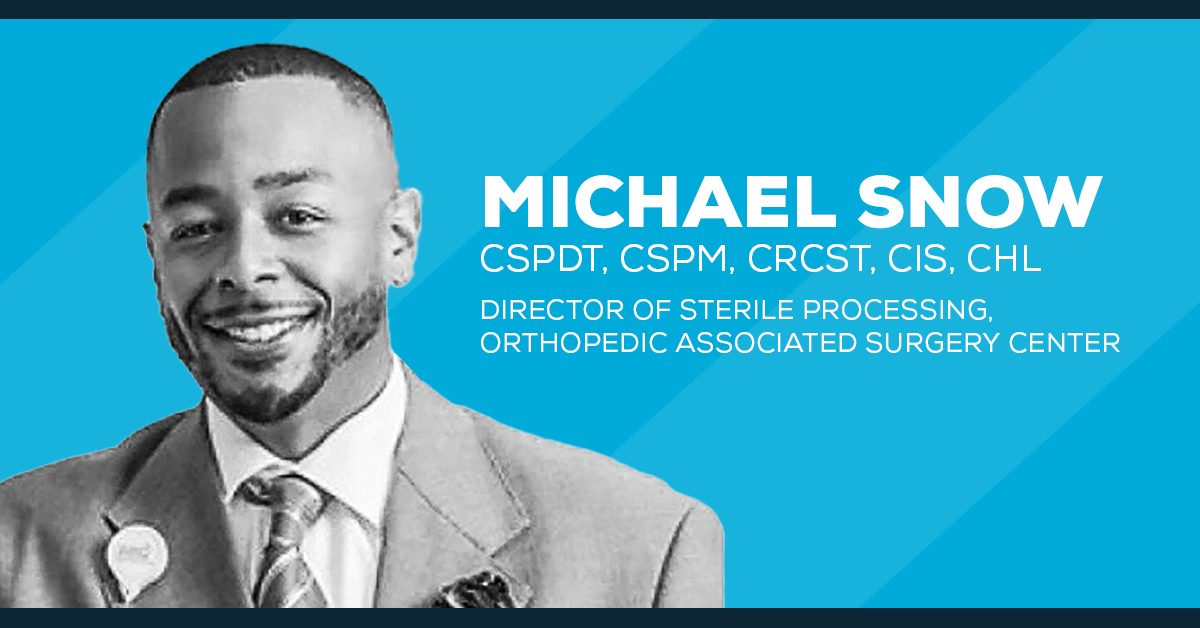
Hartford, Connecticut–In today’s fast-evolving surgical landscape, sterile processing departments (SPDs) are being asked to do more than ever before—often with fewer resources and tighter timelines. At the crux of that pressure is a responsibility that’s easy to overlook but impossible to operate without: inventory management.
In SPD, inventory isn’t just about counting instruments on a shelf. It’s a constantly moving ecosystem that tracks where every tray is in real time, how often it’s being used, how quickly it can be safely turned over, and whether there’s enough supply to meet surgical demand.
Every decision, from case scheduling to patient readiness, depends on having the right instruments available, sterilized, and accounted for at exactly the right moment. When that system breaks down, delays ripple into the operating room. When it works, it’s an invisible backbone supporting the entire surgical operation.
For Michael Snow, CSPDT, CSPM, CRCST, CIS, CHL, this challenge isn’t a burden. It’s the job.
As the leader of an in-house SPD team of 12 technicians at Orthopedic Associates Surgery Center in Hartford, Connecticut, Snow oversees a high-volume operation performing roughly 6,000 cases per year, 1500 of which are total joint cases. A growing appetite for outpatient surgery is causing an influx of orthopedic procedures at OASC, including total joints and specialized hand and ankle cases. In the face of growing demand, Snow’s department has had to adapt quickly.
At the center of that evolution is a smarter, more integrated approach to inventory management—one that connects teams, streamlines workflows, and ultimately supports better patient outcomes.
What Makes an SPD Inventory System “Advanced”?
For Snow, what makes an inventory system “advanced” isn’t just its functionality—it’s its reach across the entire surgical team.
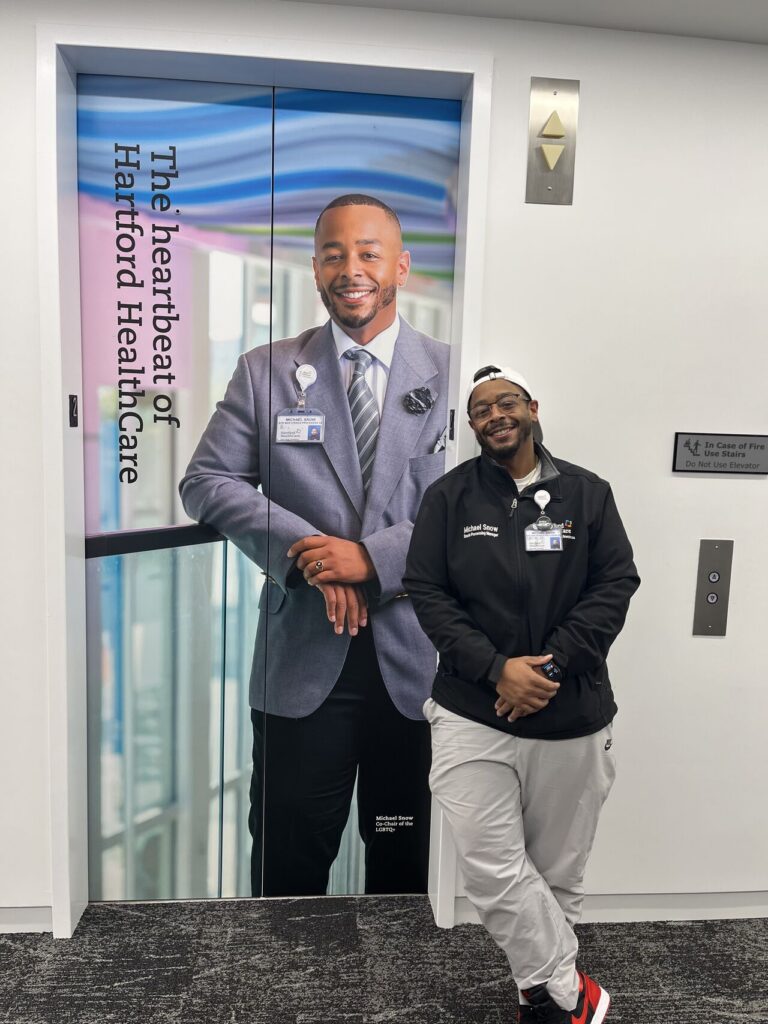
“What makes an inventory system advanced is partnership—not only just for SPD, but for the operating room,” said Snow. “When the surgical team is looking for a tray or instrumentation, there’s a system they can go through to find all those answers right in front of them.”
This shared visibility between SPD and the OR has reshaped communication. Rather than operating in silos, SPD technicians and OR staff now work in constant coordination, supported by a mix of real-time system updates and direct communication—texts, emails, messages, and face-to-face check-ins.
“There’s no such thing as too much information,” said Snow.
This level of coordination is especially critical in a surgery center environment, where space and inventory are inherently limited. Unlike large hospital systems with surplus equipment, Snow’s team must operate with precision, making the most of every available resource.
On a typical day filled with shoulder procedures, for example, the team may be working with only a handful of instrument sets. By coordinating those sets with the surgical schedule and tracking turnaround times, SPD can ensure each case runs smoothly from the early hours of the morning through the final procedure of the day.
“On any given day, we might only have six sets available, but double the amount of procedures and surgeries,” said Snow. “So, we pair each set with the OR schedule and calculate how long we have to turn them over, making sure we’re ready for that last case in advance.”
That turnaround process—spanning decontamination, inspection, sterilization, and cooling—can take anywhere from two to four hours. Without clear visibility into where each set is in that process, delays become almost inevitable.
“If you don’t have a system that tells you exactly where that set is, you’re setting yourself up for failure,” said Snow.
How Data Improves Strategy
Beyond keeping daily operations on track, Snow’s team also uses inventory data to think more strategically. By analyzing usage trends, they can identify when demand is outpacing supply and make informed recommendations to expand inventory.
“If we’ve used a tray over 300 times, we can present that data and say it might be beneficial to add more sets,” said Snow. “We almost always get a ‘yes,’ because we support our claims with real data.”
That data-driven approach reinforces what Snow sees as the core mission of SPD: patient safety.
“Patient safety is at the heart of what we do,” said Snow. “The inventory system is just a plus-one to everything we’re already doing to ensure instruments are sterilized correctly and available when needed.”
Holding Strong in an Evolving Industry
Even with strong systems in place, the work is never static. New surgeons bring unfamiliar instruments. Technologies evolve. Industry standards shift. For Snow, staying current isn’t optional—it’s foundational.
“We never say ‘this is how we’ve always done it,’” said Snow. “We’re always staying up to date, because that’s the name of the game in our field.”

That mindset also guides decisions around equipment and workflow. When evaluating container systems, for instance, Snow’s team transitioned to a more ergonomic and scalable solution that improved organization while reducing reliance on disposable materials—an operational shift that delivered both efficiency and cost savings.
Looking to the future, Snow is realistic about what would make the biggest impact: more equipment and more space. But even within existing constraints, his team continues to perform at a high level—driven by communication, data, and a shared commitment to doing things the right way.
As more surgical care continues to shift into outpatient settings, one thing is clear—SPD leaders like Snow aren’t just keeping pace with change. They’re helping define what comes next.
P.S.
Snow would like to take this opportunity to congratulate his friend and peer, Sarah B. Cruz, president-elect of the Healthcare Sterile Processing Association (HSPA).
“I remember sharing spaces with Sarah when we were just pushing case carts up and down the hallways, thinking about what our future would hold,” said Snow. “If you had told me that she would be the president-elect and I’d be a director of an SPD, I don’t think I would believe it in a million years. But here we are, making a difference, and watching the industry change right before our eyes.”
SterileBits: Define What’s Next
To learn more about Michael Snow and connect with him on LinkedIn, click here.
To read more stories similar to this one, visit the blog on www.sterilebits.com and follow SterileBits on LinkedIn and Facebook.
To learn more about instrument protector cards and the Robobag by SterileBits, visit our Products page or contact us here.